An FBA removal order costs $0.84 per unit for a standard-size item under half a pound, per the FBA removal and disposal fee schedule↗ that took effect on 15 January 2026. That number gets quoted constantly, and it is accurate. It is also roughly a fifth of what you spend if you intend to sell the unit again.
The removal order is the first of four charges. The other three happen after the carton leaves the fulfillment center: processing at a third-party warehouse, freight back into the network, and the inbound placement fee Amazon bills 45 days later. Together they land between $2.48 and $4.29 per unit for a small standard-size item, before you count anything that went wrong.
That range is the number to plan against. Everything below explains where each part comes from, which parts are published rates and which are estimates, and how to work out whether your specific SKU is worth the trip at all.
Fee source: Amazon Seller Central, FBA removal and disposal order fee changes (GZ5Q2VW5WF4JWRGC), checked 3 November 2026.
Four charges sit behind one FBA removal order
| Stage | Per unit | Where the number comes from |
|---|---|---|
| Removal from the fulfillment center | $0.84 | Amazon published rate, standard-size 0–0.5 lb |
| Receiving, sorting and relabelling at a 3PL | $1.00–$1.80 | Range across publicly posted prep-center rate cards |
| Consumables and repacking | $0.15–$0.40 | Estimate, varies with whether the unit needs a new poly bag |
| Freight back to a fulfillment center | $0.35–$0.85 | Estimate per unit, depends on carton count and destination |
| Inbound placement service fee | $0.14–$0.40 | Amazon published range, small standard, single inbound location |
| Total before exceptions | $2.48–$4.29 | Arithmetic sum, not a quote |
Figure basis: Only the first and last rows are Amazon published rates. The 3PL row is a range from publicly posted rate cards, not a quotation for your cartons. The two middle rows are planning estimates. Any warehouse quoting you a single per-unit price has folded at least three of these rows into one number, and you should ask which.
Two things make that table honest rather than reassuring. First, every row scales differently. Removal fee follows Amazon's weight tier. 3PL handling follows how mixed your cartons are, not how many units they contain. Freight follows cartons and destination, so a light bulky SKU pays far more than its removal fee suggests. Second, the table stops at "arrives at the fulfillment center". It does not include the three to six weeks the stock is unsellable, and that cost never appears on an invoice.
Only one of the four exits needs a second trip
The FBA returns report in Seller Central assigns a disposition to every unit that comes back, and that disposition decides which of four exits is open to you. Three of them end the story at the fulfillment center.
| Exit | What happens to the unit | Second trip? | Cost basis |
|---|---|---|---|
| Return to an address | Ships to a warehouse you nominate | Yes, if you intend to resell | Removal fee, same rate card as disposal |
| Disposal | Destroyed, or donated if eligible | No | Removal fee, same rate card |
| FBA Liquidations | Sold in bulk to a liquidation partner | No | 15% referral on recovery value plus a processing fee |
| FBA Grade and Resell | Relisted as Used on the same ASIN | No, it never leaves | $1.50–$4.10 per unit, only if it relists |
Removal and disposal share a single rate card, which changes the comparison entirely. Per Amazon's disposal fee page↗, the fee is identical whether the unit goes to your warehouse or into a shredder. The difference is entirely in what you do next.
Charge source: Amazon Seller Central, FBA disposal order fees (G5FKTA8LXU4TZPD5), checked 3 November 2026.
Liquidation skips the removal fee and charges a 15% referral fee on gross recovery value plus a processing fee↗ that starts at $0.25 for a standard-size unit under half a pound. You recover a fraction of retail, in exchange for doing nothing.
Grade and Resell is the one worth checking before you default to removal. If Amazon grades the unit as Used and relists it, you pay $1.50 for a small standard-size item, $1.80 for large standard, $2.65 for small or medium oversize, $4.10 for large or special oversize, per the Grade and Resell fee page↗. If the unit grades as Unsellable, you pay nothing and it stays in your unfulfillable inventory awaiting some other decision.
Fee source: Amazon Seller Central, Restore to New and FBA Grade and Resell processing fees (G201505310), checked 3 November 2026.
One default catches sellers who never visit the settings page. Since 30 September 2025, an account that has not configured its automated unfulfillable settings is enrolled in Liquidations automatically, and the Donations programme became mandatory for eligible items with no opt-out, per Amazon's enrolment announcement↗. If you assumed unreturned stock was being disposed of, part of it has been going to a liquidation partner instead, for a fraction of retail. No second trip happens to stock you never asked to have returned.
One change here has been undersold. From 30 September 2026, units recovered through Restore to New, formerly the refurbishment service, also carry that $1.50–$4.10 processing fee. Refurbishment used to be free. If your plan assumed Amazon would clean up returns at no charge, that assumption expired.
The first charge: what an FBA removal order actually costs
The 2026 rate card is where a lot of published advice goes wrong. Several guides circulating this year state that the 0.5–1.0 lb band fell to $1.33 and the 1.0–2.0 lb band to $2.07. Neither is correct. Only the 0–0.5 lb band moved.
| Size tier | Shipping weight | Before 15 Jan 2026 | From 15 Jan 2026 |
|---|---|---|---|
| Standard-size | 0 to 0.5 lb | $1.04 | $0.84 |
| Standard-size | 0.5+ to 1.0 lb | $1.53 | $1.53 |
| Standard-size | 1.0+ to 2.0 lb | $2.27 | $2.27 |
| Standard-size | More than 2 lb | $2.89 + $1.06/lb above 2 lb | $2.89 + $1.06/lb above 2 lb |
| Large bulky, extra-large, special handling | 0 to 1.0 lb | $3.12 | $3.12 |
| Large bulky, extra-large, special handling | 1+ to 2.0 lb | $4.30 | $4.30 |
| Large bulky, extra-large, special handling | 2.0+ to 4.0 lb | $6.36 | $6.36 |
| Large bulky, extra-large, special handling | 4.0+ to 10.0 lb | $10.04 | $10.04 |
| Large bulky, extra-large, special handling | More than 10 lb | $14.32 + $1.06/lb above 10 lb | $14.32 + $1.06/lb above 10 lb |
Fee source: Amazon Seller Central, FBA removal and disposal order fee changes (GZ5Q2VW5WF4JWRGC), table read 3 November 2026. Special handling items may include apparel, shoes, watches, jewellery and dangerous goods.
The size tier is assigned by Amazon's measurements, not yours. Shipping weight is the greater of actual weight and dimensional weight, rounded up. For standard-size tiers under one pound the rounding is to the nearest 0.1 lb, which means a unit weighing 0.51 lb bills at the 0.5–1.0 lb rate of $1.53, not the $0.84 tier. If your product sits near a boundary, measure the packed unit rather than the bare product, and check the fee preview in Seller Central before confirming the order.
There is also a timing change that affects cash flow rather than total spend. From 1 March 2026, removal and disposal fees are charged per unit as each unit is processed, rather than as one charge when the whole order completes. A 500-unit removal that used to produce one line item now produces charges spread across days or weeks, per Amazon's announcement of the revised date↗.
Policy source: Amazon Seller Central seller forums, FBA removal and disposal fees to be charged as units are processed, effective 1 March 2026, checked 3 November 2026.
The second charge: what the 3PL quote leaves out
A prep center quoting "$1.20 per unit" is quoting one action. Your carton will trigger three or four.
Receiving is priced per carton, per pallet, or per unit, and the three are not interchangeable. A removal order for 400 units can arrive as 12 cartons over three separate weeks, because Amazon pulls stock from whichever fulfillment centers hold it. Twelve cartons at a $2.50 receiving fee is $30, or $0.075 per unit. The same 400 units arriving in four cartons is $10. You cannot control the split, which is why the carton count belongs in the quote rather than in the invoice.
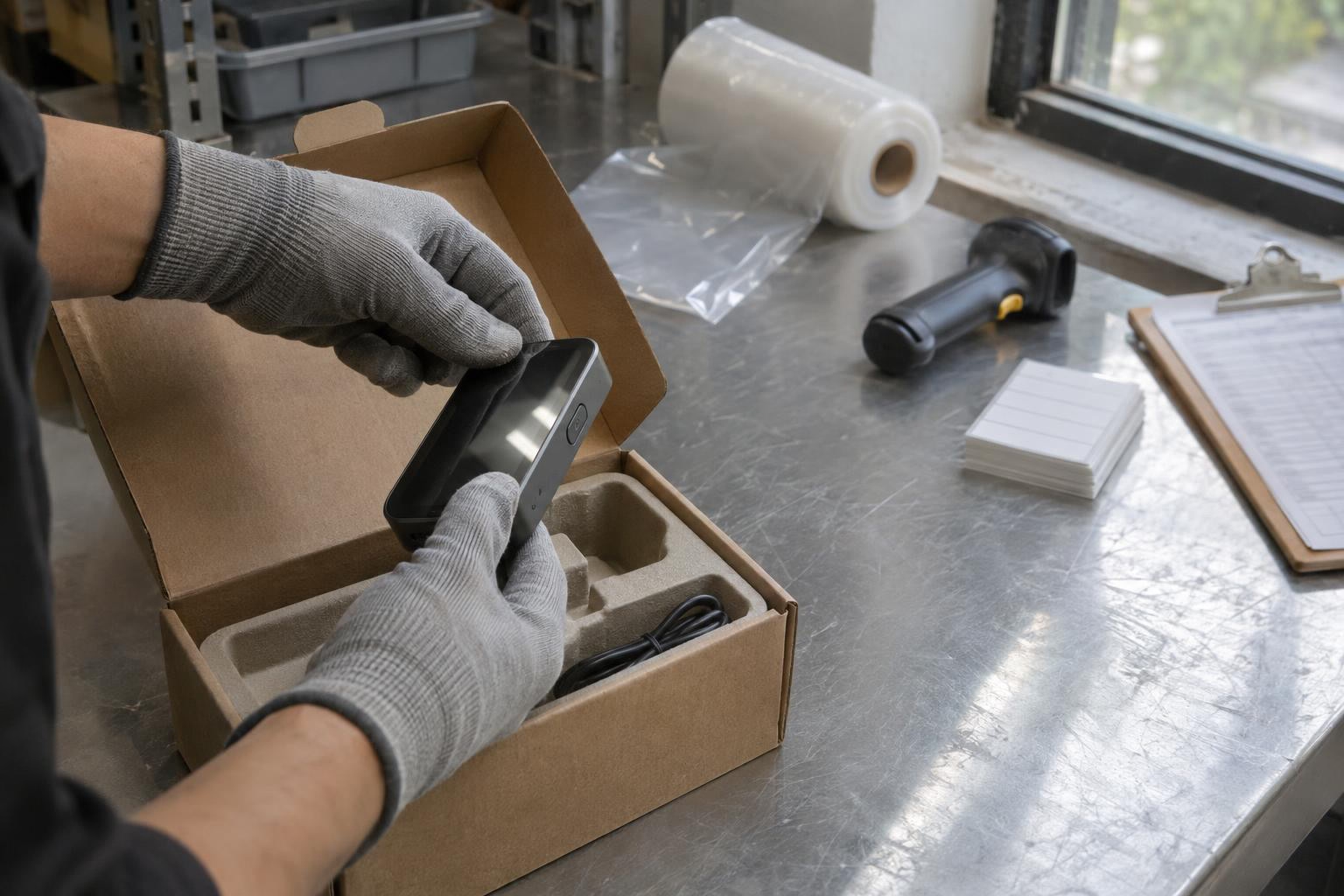
Sorting is the expensive step and the one most often underestimated. A removal shipment is graded by chance, not by SKU. Mixed cartons of a single ASIN with three packaging variants, or units whose labels no longer match the listing, need to be opened and identified individually before anyone can relabel them. This is billed per unit, and it is where a quote built on "relabelling" alone quietly doubles.
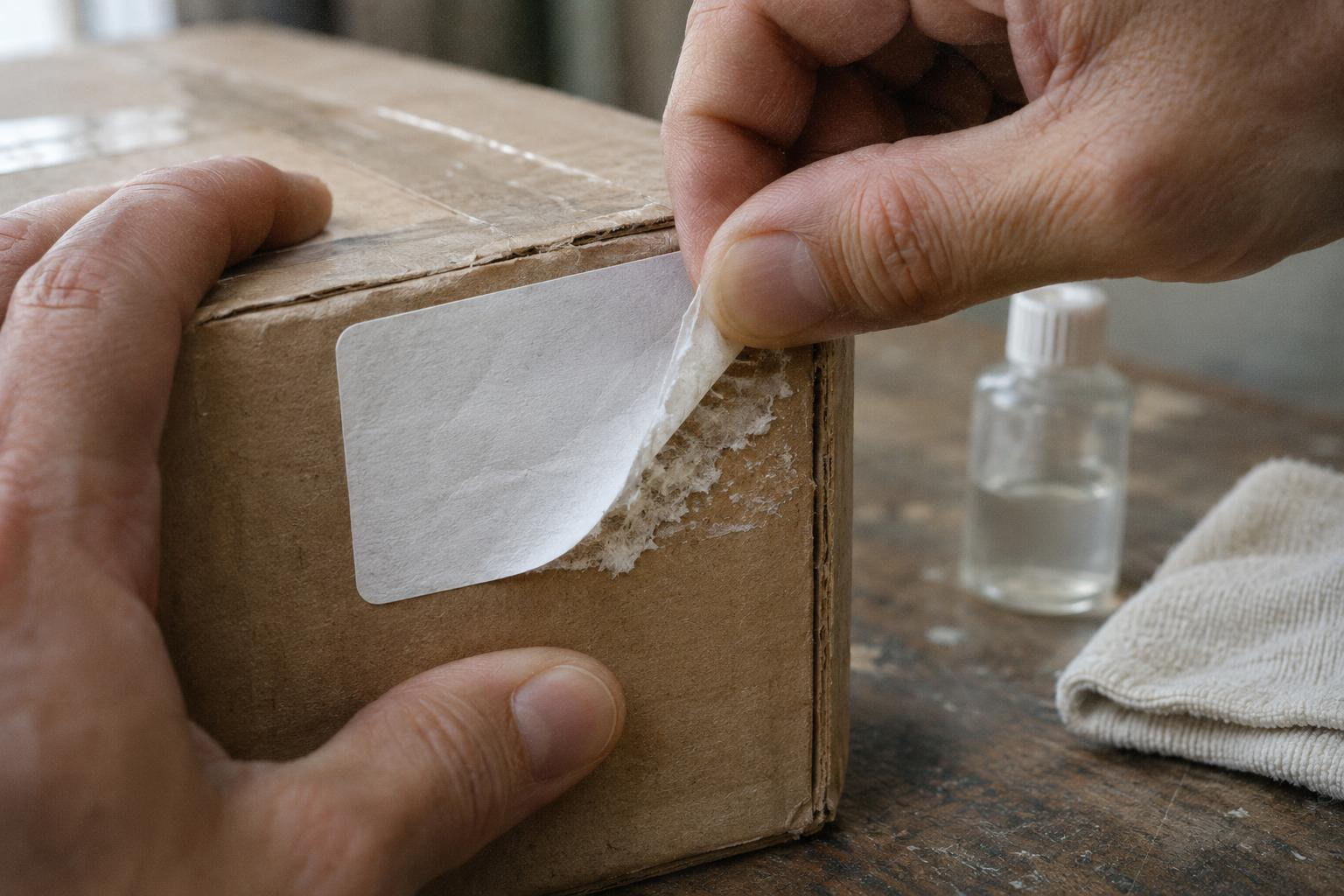
Relabelling requires removing the old FNSKU, not covering it. Amazon rejects cartons where a new label sits over an old one and the edge lifts, and a unit with two readable barcodes is a receiving exception. Budget the removal of the old label as a separate action from applying the new one.
Repacking is conditional. A unit that comes back in a crushed box needs a new one. A unit with a torn poly bag needs a new bag and, for items small enough to be a choke hazard, a suffocation warning. These are consumables plus labour and they are billed per unit, not per carton.
Ask for the quote broken into those four lines with the carton count stated separately. A warehouse that will not split receiving from handling is either very sure of your carton count or has not thought about it.
The third charge: freight back, and the fee that arrives 45 days later
Freight back into the network is the row sellers remember, and it is rarely the biggest. The part they forget is the inbound placement service fee, which Amazon charges per unit based on how many fulfillment centers you send to, and bills 45 days after the shipment is received. Amazon publishes the full per-unit range on the inbound placement service fee page↗.
| Option | What you do | Fee for small standard size, 0–8 oz | Fee for large standard, 3–5 lb |
|---|---|---|---|
| Minimal shipment splits | Send to one location, Amazon distributes | $0.14–$0.32 per unit | $0.38–$0.76 per unit |
| Amazon-optimized splits | Send to five or more locations yourself | No fee | No fee |
Fee source: Amazon Seller Central, FBA inbound placement service fee (GC3Q44PBK8BXQW3Z), rates effective 15 January 2026, checked 3 November 2026. Ranges vary by inbound region and capacity.
The free option requires at least five identical cartons or pallets per item, with the same quantity and the same item mix in each. That condition is the reason this fee is a structural problem for returned stock rather than a rounding error. A return batch is by definition small and mixed. You are unlikely to have five identical cartons of one SKU coming out of a removal, which means you pay the single-location rate on every unit, on top of the freight.
Two ways around it, neither free. You can hold the relabelled units at the 3PL until you have enough to build compliant cartons, which trades placement fee for storage days. Or you can route the stock into Amazon Warehousing and Distribution first and let Amazon distribute from there, which carries its own storage and processing rates. Run both against the per-unit placement fee before choosing, because on a 300-unit batch the placement fee is real money and on a 3,000-unit batch it is a line item.
If the stock has to cross a border to rejoin a network, add the duty question. Moving units from a Canadian removal into a US fulfillment center is an import, and whoever stands as importer of record pays the duty. That is the same split DDP and DAP describe, applied to 300 units instead of a container.
Freight itself depends on carton count and destination more than weight. Consolidating 12 small cartons into four denser ones usually beats shopping for a cheaper per-pound rate, because the minimum charge per carton dominates at low volume. This is the same arithmetic that governs shipping from China to Amazon FBA on the inbound leg, applied in reverse on a much smaller scale.
From 2026, nobody preps the carton for you
This is the change that moved the cost of a second trip, and it is not about fees at all.
Until the end of 2025, a seller could nominate Amazon to bubble wrap, bag and label units on arrival, at published per-unit rates. That option closed on 1 January 2026. Per the FBA Prep Service page↗, Amazon no longer offers prep and item labelling for US FBA shipments, and the change applies to inventory arriving through any route, including AWD, AGL and Amazon SEND.
Policy source: Amazon Seller Central, FBA Prep Service (G201023020), change effective 1 January 2026, checked 3 November 2026.
The sentence that matters for returned stock is the one about claims. Shipments created after 1 January that arrive without proper prep and labelling are not eligible for reimbursement if the units are damaged or untraceable. Read that against what a returned unit looks like. It has already been through a customer, a fulfillment center, and a truck. Its packaging is the part most likely to have failed. Send it back in that condition and the loss is yours, not Amazon's.
So prep becomes a fifth charge, and it belongs in the 3PL scope rather than in the Amazon bill. Expect it inside the $1.00–$1.80 handling range if the warehouse quoted you a prep-inclusive rate, and expect it as an add-on if the quote said "relabelling" only. Ask directly whether the price includes poly bagging and the suffocation warning, because the answer changes the per-unit total by $0.30 to $0.80.
There is a second-order effect worth naming. Because Amazon now inspects rather than fixes, a sloppy relabel does not get corrected at the dock. It gets rejected, and the carton comes back to the 3PL, and you pay freight twice.
The $0.84 removal fee↗ is the cheapest part of this entire exercise; the return leg after a rejection is where a failed second trip gets expensive.
The arithmetic: is your unfulfillable inventory worth resending
Work it per SKU, not per shipment. The formula is short enough to do on one line.
Net per unit from recovering = (expected sale price × expected sell-through) − FBA fulfilment fee − second-trip cost
Net per unit from writing off and reordering = −(removal or disposal fee) − replacement landed cost Replacement landed cost is what you pay today to put a fresh unit on the shelf, and on the China-to-US lane that number moves with the freight market; the China to USA shipping cost calculator shows what the freight line contributes to it.
Recover if the first number is larger. That is the whole test, and it produces a different answer for every price point.
Three worked examples, using the $2.48–$4.29 second-trip range from the first table and assuming a standard-size unit at the $0.84 removal tier:
| Low-value accessory | Mid-value item | High-value item | |
|---|---|---|---|
| Expected sale price | $9 | $35 | $120 |
| FBA fulfilment fee | $3.32 | $5.13 | $6.92 |
| Second-trip cost | $2.48 | $3.10 | $4.29 |
| Net if it sells | $3.20 | $26.77 | $108.79 |
| Sell-through after relisting | 40% | 60% | 75% |
| Expected net per recovered unit | $1.28 | $16.06 | $81.59 |
| Replacement landed cost per unit | $3.50 | $11.00 | $42.00 |
| Verdict | Write off | Recover | Recover |
Figure basis: Fulfilment fees are 2026 standard rates for the size tier shown; second-trip costs come from the range in the first table, with the mid and high columns using the upper half because larger items attract higher freight and placement charges. Sell-through percentages are planning assumptions, not observations. Substitute your own before deciding.
The low-value column is the one that surprises people. At $9 retail with a 40% sell-through after relisting, recovering the unit nets $1.28 and writing it off costs $4.34, so recovery still wins on paper. It stops winning once you count the labour of deciding, and that is where a floor comes from: somewhere around $12 to $15, below which disposal is the simpler answer. The floor itself is a management decision, not a rate card.
The variable that changes the answer fastest is sell-through, not cost. A relisted unit does not inherit the sales history of the original listing. It enters as new inventory with no review velocity behind it. If your recovered stock historically sells at half the rate of fresh stock, the mid-value column above falls from $16.06 to about $12.40, and the case for recovering 400 units weakens considerably. Pull your own number from a previous relist before you scale this decision across a catalogue.
When not to resend to FBA
Five conditions where the arithmetic above says no, regardless of what the batch looks like.
Under $12 a unit
The handling and freight lines do not shrink with price. Below this level you are paying a fixed cost against a shrinking recovery.
A product with a date on it
Relabelled stock re-enters with the original date. If a unit was already close to the line when it sold, the second trip consumes the remaining window.
A unit that genuinely failed
A cosmetic return can be graded and relisted. A unit that failed electronically will fail again, and every recovered unit becomes a second return with a second refund attached.
A batch too small to split
Under roughly 100 units, the placement fee and freight minimums dominate, and the per-unit cost climbs above the range in the first table.
A brand that needs price control
Liquidated and relisted units reach secondary channels. If your margin depends on a stable price, recovering the unit can cost more in channel damage than the unit is worth.
Three ways this gets miscalculated
Each of these has a visible symptom, a price, and a fix.
Reading last year's card
- Symptom: your budget shows $1.04 per unit for a lightweight item, and the settlement report shows $0.84.
- Cost: $0.20 per unit overstated, or the reverse if you copied a guide that invented a $1.33 band. On 2,000 units the error is $400 in either direction.
- Fix: read the rate against the shipping weight band, not against last year's number, and confirm in the fee preview before confirming the order.
Stopping at two charges
- Symptom: the project comes in 25% to 40% over estimate, and the overrun appears 45 days after the shipment lands.
- Cost: the inbound placement fee plus the prep you assumed Amazon would do. On a 500-unit batch at $0.40 and $0.55 respectively, that is $475 nobody budgeted.
- Fix: put the placement fee line in the budget before you create the removal order, and state in the 3PL quote whether prep is included.
Trusting a returned carton
- Symptom: units arrive at the fulfillment center damaged, and the reimbursement claim is declined.
- Cost: the full unit cost, plus the freight both ways. Post-2026, unprepped shipments do not qualify for reimbursement.
- Fix: have the 3PL photograph the inbound condition of every carton before it is opened, and refuse to ship a carton you would not accept yourself.
FAQ
Is the removal fee the same as the disposal fee?
Yes. Both use the same rate card, so the choice costs the same either way. What differs is what happens to the unit afterwards, which is where the real money sits.
How long does a removal order take to arrive?
Amazon processes disposal in about 14 business days and removal on a similar clock, with 30 business days or more during peak removal periods. Plan for the longer figure between October and January.
Does the original listing carry over to the returned stock?
The listing stays live, but the units re-enter as new inventory without the sales history of the original batch. Expect a slower sell-through than the listing average suggests.
When can I file a customer return claim?
In the US, no sooner than 60 days and no later than 120 days after the refund or replacement, per Amazon's customer return claims policy↗. In the EU the window runs 45 to 105 days. Filing at day 30 is premature and will be closed.
Can I pay Amazon to relabel the returned units instead?
Not in the US. Prep and item labelling for FBA shipments ended on 1 January 2026. That work now belongs to you or your prep partner, and shipments arriving without it are not eligible for reimbursement if damaged or untraceable.
Sources
| Document | Issued by | Reference |
|---|---|---|
| FBA removal and disposal order fee changes for 2026↗ | Amazon Seller Central | GZ5Q2VW5WF4JWRGC |
| FBA disposal order fees↗ | Amazon Seller Central | G5FKTA8LXU4TZPD5 |
| FBA removal and disposal fees charged per unit from 1 March 2026↗ | Amazon Seller Central forums | Announcement, 29 January 2026 |
| FBA Prep Service discontinued 1 January 2026↗ | Amazon Seller Central | G201023020 |
| FBA inbound placement service fee↗ | Amazon Seller Central | GC3Q44PBK8BXQW3Z |
| Restore to New and Grade and Resell fees↗ | Amazon Seller Central | G201505310 |
| FBA Grade and Resell programme↗ | Amazon Seller Central | GEHWJRW6JZWKD99H |
| FBA customer return claims↗ | Amazon Seller Central | G9N934L7Y4SFWPJ4 |
| FBA customer return claims, EU window↗ | Amazon Seller Central France | G84Z6B8BTKVNV53S |
| Liquidations and Donations enrolment change↗ | Amazon Seller Central forums | Announcement, 30 September 2025 |
Published 3 November 2026. Rates and policy windows verified against Amazon Seller Central on that date. Marketplace rules change without notice; re-check the fee pages before committing a batch.