Six point four cubic metres from Ningbo to a warehouse in City of Industry. On 26 October 2026 that shipment cost $2,332 to move and clear before duty, and $9,082 delivered once a 37.5% stack was paid on $18,000 of goods.
The money is not the difficulty, and the arithmetic below shows why. Put October 2026 ranges on the same 6.4 CBM and the freight-side total lands anywhere between $1,736 and $3,295, a gap of 90% for identical cargo on the same lane. Almost all of it sits in the destination charges that quotes itemise last, if at all.
The difficulty is the calendar. An LCL shipment passes through nine handoffs, and at seven of them the file that has to be right is not in your hands. When the box is held by CBP for something a stranger did, your cargo waits the same number of days an FCL would, and the only difference is that you had less control over it from the start.
This is the process, handoff by handoff, with the codes CBP uses when it stops the box and what each one means for the day you are standing in.
The LCL consolidation process, handoff by handoff
Every LCL shipment to the United States follows this chain. The days are working days from booking, for a Shanghai to Los Angeles routing in a normal month, and the last column is where the shipment actually stalls.
| # | Handoff | Who holds the file | Typical days from booking | What stalls it |
|---|---|---|---|---|
| 1 | Booking and space allocation on a consolidation | Forwarder, then the co-loader | 0 | You booked a sailing, not a container. Space exists only once the consolidator has enough cargo for that week |
| 2 | Delivery to the origin CFS | You, or your supplier | 21 to 28 | A cargo cut-off, usually three to five days before sailing, that is earlier than the sailing date you were quoted |
| 3 | Stuffing, seal, export declaration, VGM | Consolidator, origin broker | 25 to 30 | One shipper's cargo arrives late and the whole stuffing date moves |
| 4 | ISF filed with CBP | Your broker, on your bond | 24 hours before lading | The consolidator's stuffing location and name, which you do not have until the container is planned |
| 5 | Ocean leg | Carrier | 14 to 18 to Los Angeles | Blank sailings and rollovers, which hit LCL harder because your space can be given to a full container |
| 6 | Discharge and drayage to the destination CFS | Carrier, terminal, CFS operator | 1 to 3 after arrival | A hold code on the container. It cannot be drayed to the CFS until it clears |
| 7 | Deconsolidation | Destination CFS | 1 to 3 | Queue at the CFS, and any exam ordered on the container |
| 8 | Entry and release, one per house bill | Your broker | 1 to 3 after devan | A document discrepancy, an ISF mismatch, an unpaid bond, a PGA referral |
| 9 | Pickup or delivery | Your trucker | 1 to 3 | No appointment, and the CFS free-time clock running out |
Two entries on that table are not like the others. Handoff 4 and handoff 8 are the only two where the critical data is entirely yours to get right, and they are also the two that cause most of the delays people blame on the forwarder.
What consolidation does to your cargo
An LCL container is one customs unit carrying several shipments that have nothing in common except a destination port. CBP treats the container as the physical thing it inspects and the house bill as the thing it releases, and those two are not the same object. That gap is the whole risk profile of LCL.
At the origin CFS, your cargo is received, weighed, measured, and entered into the consolidator's system. Measurements taken there override what you declared, and the bill is adjusted to the larger number. Palletised cargo measured at 6.4 CBM when you booked 6.0 is a routine outcome, and it is billed at the measured figure.
The cargo then waits for the container to be filled. This is the part of LCL nobody prices properly. A consolidation for a Tuesday sailing may stuff on Friday, and your goods sitting in the CFS from Tuesday to Friday are not late because anyone mishandled them. They are early. Consolidated cargo typically runs five to fifteen days longer door to door than an FCL on the same sailing, and almost none of that difference happens at sea.
Data source: LCL transit premium of five to fifteen days and a cargo cut-off three to five days before sailing, UFI Shipping LCL guide↗, checked 26 October 2026.
Booking is priced on W/M, meaning the higher of cubic metres and metric tonnes, with a minimum of one CBM or 1,000 kg per shipment. A 0.6 CBM shipment of samples pays for a full cubic metre. A 1 CBM crate of machine parts at 500 kg still pays one W/M, but a 2 CBM crate at 2,500 kg pays 2.5. Dense cargo is charged by weight and nobody warns you at quote stage, because the quote was built on the volume you typed.
October 2026 rates on this lane clustered at $137.22 per CBM to Los Angeles and New York in one published reading, with broker-level quotes between $95 and $140 to the West Coast and $120 to $165 to the East Coast. Those are ocean figures. They exclude everything in the bill further down.
Data source: Sino Shipping China to US guide↗, LCL at $137.22 per CBM, October 2026 update; DTFU Logistics↗ puts paid LCL at $95 to $140 per CBM to the West Coast, checked 26 October 2026.
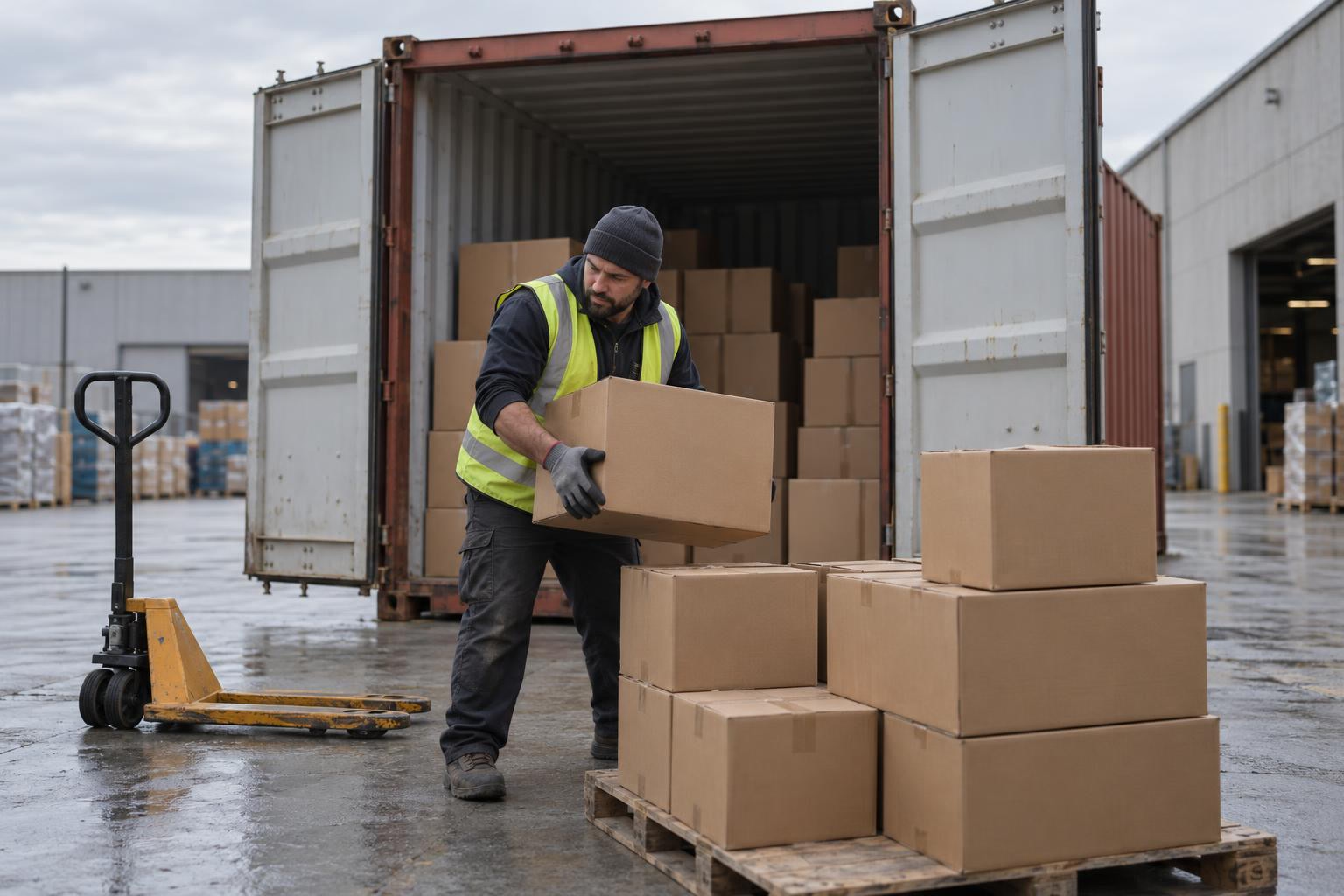
Two bills of lading, and the reason it matters
Your forwarder issues a house bill of lading. The carrier issues a master bill to the consolidator or NVOCC that booked the space. You are a party to the first and a stranger to the second.
This matters at three moments.
CBP posts holds against the master bill, because the master bill is the container. Your house bill can show a clean release while the box cannot leave the terminal. The two statuses are independent, and a forwarder reading only the house bill will tell you everything is fine while nothing moves.
At filing, the importer of record on your entry is whoever is named on the house bill. If your supplier booked under their own forwarder and the house bill shows the supplier as shipper and you as consignee, the entry is yours and the bond is yours. If the house bill shows a party that is not the actual buyer, the entry cannot be filed against it without a correction, and corrections take days.
A release is issued per house bill. Nine consignments in one container get nine releases at nine different times. Yours being available has no bearing on whether the container can be opened.
Ask for the house bill draft before the vessel sails, not after. Four fields cause almost every problem: consignee name and address exactly as it appears on your importer number, the commodity description, the piece count, and the gross weight.
Regulation source: CBP ACE Ocean Appendix D, disposition codes↗, code 1C confirms an entry can be released while the cargo stays held, checked 26 October 2026.
The two ISF elements only the consolidator can give you
The Importer Security Filing has ten elements and must reach CBP 24 hours before the cargo is loaded. Eight of them come from your own commercial documents. Two do not.
Container stuffing location and consolidator name are facts about the container, and in an LCL booking you do not own the container. They are also the two elements CBP allows you to supply as late as 24 hours before the vessel arrives, precisely because the trade cannot produce them at booking.
That flexibility is not a loophole. It is the reason ISF filings on LCL cargo commonly go in with those fields marked unknown and never get updated, which leaves the filing inaccurate in CBP's targeting system even when it was filed on time.
The exposure is $5,000 per violation in liquidated damages for a filing that is late, incomplete, or inaccurate. Each defective element can be assessed separately, so one shipment with a missing consolidator and a wrong HTS-6 is not one claim. CBP can also issue a do-not-load order at the origin port, which is the worst outcome available because it costs you the sailing, not just days.
Regulation source: ISF timing, the ten elements and the $5,000 liquidated damages figure from CBP's ISF guidance↗ and CBP's liquidated damages guidelines↗, checked 26 October 2026.
The fix costs one email. Ask the forwarder, in writing, for the stuffing location and the consolidator's legal name at the time you book, and put the update deadline in the same message. If the answer is that it is not known yet, ask when it will be, and diarise the 24-hour-before-arrival window. Two fields, both obtainable, both routinely skipped.
Arrival is not release: the customs clearance process, one house bill at a time
Three separate events get folded into the word "cleared" in most conversations, and the LCL customs clearance process has one layer an FCL never sees: the container has to be devanned before any house bill can leave the building.
The container is discharged and, if no hold is posted, drayed to the destination CFS. Deconsolidation takes one to three business days from arrival at the CFS. Only then is your cargo physically separable from everyone else's, and only then can the CFS release it to a truck.
Your entry is filed by your broker, usually before arrival. Duty is paid at that point or on the tenth working day after, depending on your bond arrangement. Entry acceptance releases the cargo in CBP's system, not from the building.
Then the CFS issues a delivery order, and the free-time clock that started at devan keeps running. A shipment whose entry cleared on Monday can still be sitting on the floor on Friday because nobody booked a pickup.
This is where most of the money that gets called "customs delay" is actually spent. The customs part was fine. The trucking appointment was not.
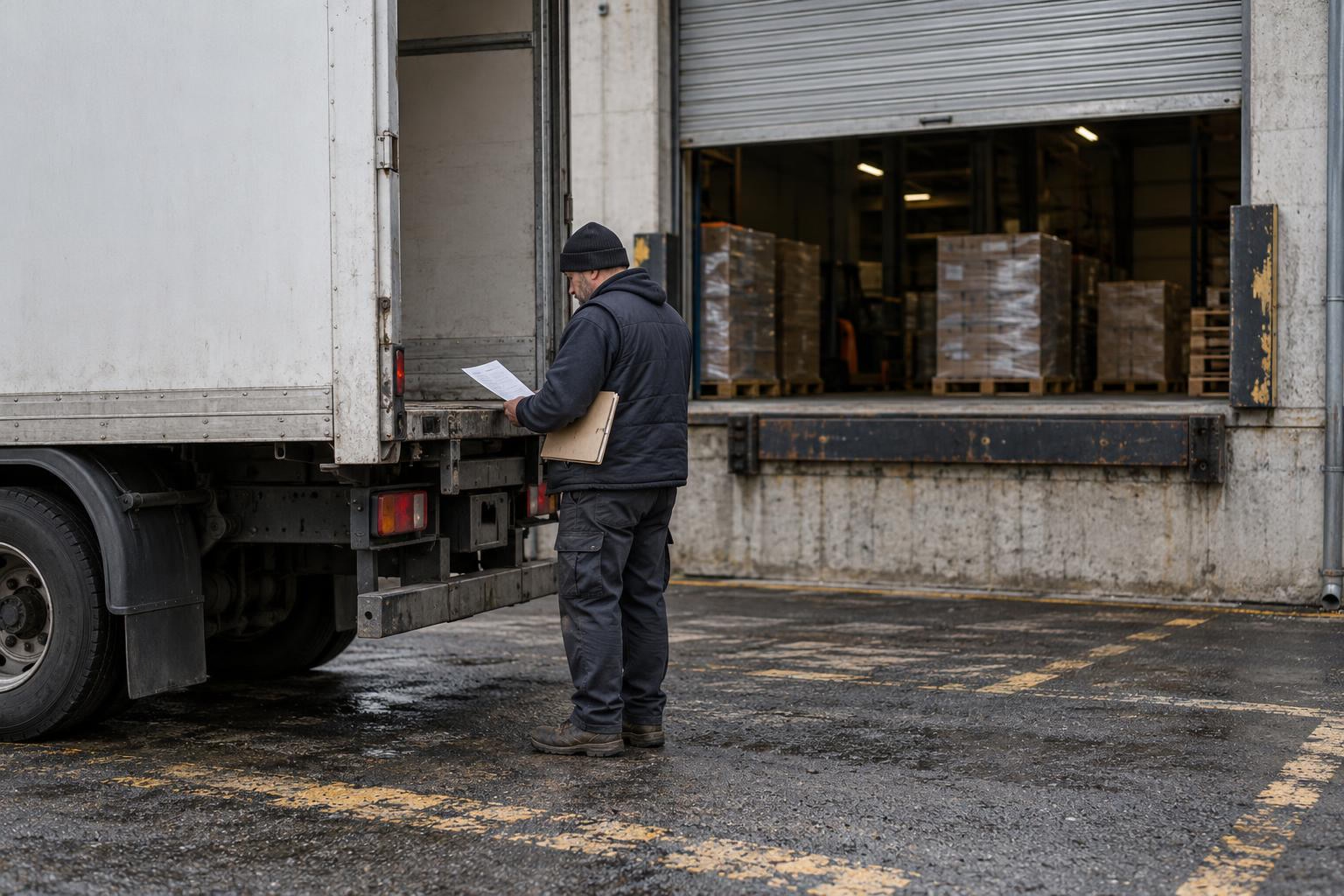
Charge source: destination CFS free time of three to seven calendar days measured from devan rather than from the arrival notice, from CFS charges 2026↗, checked 26 October 2026.
The hold codes, and what each one asks you to do today
When CBP stops a container, the manifest shows a disposition code. Importers usually hear a number without a meaning. These are the four that account for most LCL delays, quoted from CBP's disposition code appendix rather than from broker summaries.
| Code | CBP's definition | What it means in practice | Typical duration |
|---|---|---|---|
| 1H | CBP hold placed at port of discharge, manually posted. Release is denied | A physical inspection is coming, or documents are being reviewed before one. Nothing moves until it is removed | 3 to 7 days for a document review, longer if it becomes an exam |
| 5H | Entry processing hold, targeted for a document discrepancy exam | CBP is comparing your invoice, packing list and entry against each other. No container exam yet. Answering fast is the whole game | 1 to 2 weeks if the discrepancy is real |
| 7H | NII exam ordered, cargo held pending non-intrusive inspection | X-ray or gamma scan of the whole container. Your cargo is not opened, but the box cannot move until it is scanned | 1 to 3 business days |
| 1C | Entered and released, but cargo must be held intact while any hold is in force | Your part is done and it still will not move. The most misread code on the list | Until the container-level hold lifts |
Regulation source: definitions quoted from CBP's ACE Ocean Appendix D disposition codes↗, January 2026 version; duration ranges from 2026 broker guides at Go Freight↗ and SeafreightGo↗, checked 26 October 2026.
A 1H that started as a document review and turned into a full devanning can run three weeks. In that time your entry can be filed, your duty paid, and your release issued, and your six cartons stay on a floor in Long Beach.
There is one action available to you on day one, and it is to ask the broker three questions in a single message: what code is posted, is it against the master bill or the house bill, and what document is CBP waiting for. A broker who answers "customs is checking" has not looked.
When another shipper's cargo stops your container
This is the cost of sharing a box, and it is worth putting numbers on because the summaries leave it as a vague warning.
CBP does not charge for an examination. The Centralized Examination Station that strips the container is a private business, the trucking move to it is a private move, and the terminal storage runs on its own clock. The importer pays all of it, and in a shared container the consolidator allocates the container-level bill across the house bills inside, usually by volume.
That allocation is the only good news in LCL. A 6.4 CBM shipment in a 55 CBM container carries roughly 12% of the exam bill.
| Exam type | Container-level cost | Delay | What it means for a 6.4 CBM house bill |
|---|---|---|---|
| NII / VACIS scan | $300 to $400 | 1 to 3 business days | About $35 to $50 of the bill, 2 to 3 lost days |
| Tailgate | $350 to $500 | 2 to 5 business days | About $40 to $60, 4 lost days |
| Intensive exam at a CES | $1,500 to $3,500, plus $300 to $600 drayage, plus $50 to $150 a day at the CES | 5 to 15 business days, longer at LA/LB in a busy month | About $175 to $410 of the exam, and the full 15 days |
Fee source: exam type costs, CES drayage and CES storage ranges from 2026 guides by Customs Broker USA↗ and SeafreightGo↗; pro-rata allocation is market practice, not regulation, checked 26 October 2026.
Read the last column again. The fee is diluted by eight other importers. The delay is not diluted at all.
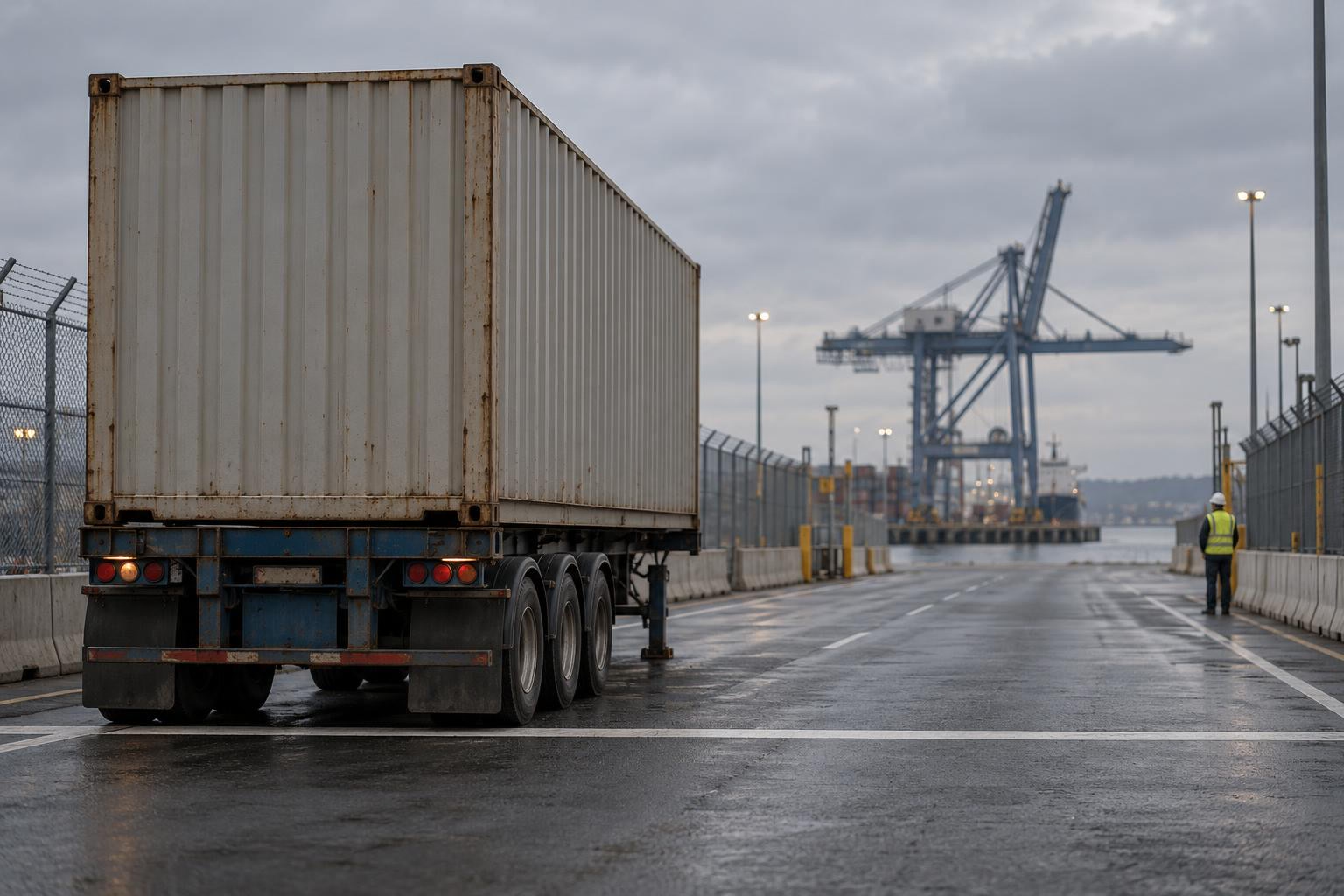
Fifteen lost days on a container that was meant to restock a listing is the cost, and it is paid in full by every consignment in the box. If your reorder point assumed a 30-day pipeline, an intensive exam turns it into 45 and the stockout happens before the cargo clears.
Four things are genuinely in your control.
Choose a consolidator with direct sailings rather than one that re-consolidates at a hub, because every extra hub is another chance to be in someone else's container.
Ask whether the forwarder offers a direct LCL service where the box carries only their own customers' freight. It costs more per CBM and it removes the random stranger.
Split a large LCL booking into two sailings when the cargo is not urgent, so one hold cannot stop the whole order.
Keep a two-week buffer on LCL that you would not keep on FCL, and price that buffer into the reorder point rather than discovering it.
Two clocks that cost more than the freight
The first clock runs at the CFS. Free time at the destination CFS is three to seven calendar days and starts at devan, not when the arrival notice reaches your inbox. Storage after that runs $5 to $15 per cubic metre per day at busy port facilities. For 6.4 CBM at $10, that is $64 a day, which sounds survivable until it runs three weeks and reaches $1,344, or roughly the entire ocean freight.
Charge source: storage of $5 to $15 per CBM per day after three to seven free days, WarehousingCosts CFS guide↗, checked 26 October 2026.
The second clock ends shipments. If no entry is filed within 15 calendar days of arrival, CBP orders the merchandise into a bonded General Order warehouse at the owner's risk and expense. You then have six months from the date of importation to file, pay duty and accrued charges, and recover it. After that it goes to auction. GO storage runs well above commercial bonded rates, and the transfer itself is billed.
The detail that catches people: a customs hold does not pause the 15 days. A three-week intensive exam can consume the entry window while the cargo is physically unavailable, and the clock still runs from arrival. Entry can be filed on held cargo. Release is what waits, not the filing.
Regulation source: 15-day entry window, General Order transfer and the six-month auction period under 19 CFR Part 127↗, checked 26 October 2026.
So the instruction is blunt. File the entry as soon as you have the house bill and the invoice, whether or not the container is moving. Do not wait for release to start the paperwork, because the paperwork is the thing that stops the clock.
LCL or FCL: the 12 to 15 CBM rule is a rule of thumb
Every guide repeats that LCL wins below 12 to 15 CBM. That number assumes the destination CFS charge is small, and at Los Angeles rates it is not.
Destination CFS handling for US ports runs $40 to $95 per CBM, with Los Angeles and Long Beach commonly at $40 to $80 for dry cargo, plus a flat deconsolidation or release fee of $150 to $350. FCL pays none of that: it pays a terminal handling charge of a few hundred dollars on the whole box.
Put October 2026 numbers into both columns for a 6.4 CBM shipment and a lightly loaded 20ft.
| Line | LCL, 6.4 CBM | FCL, 20ft at 12 CBM loaded |
|---|---|---|
| Ocean freight | $878 | $4,400 to $6,600 |
| Origin CFS or origin THC | $160 | $250 to $400 |
| Destination CFS handling and release | $534 | Not applicable |
| Destination THC | Included in CFS | $250 to $400 |
| Documentation and ISF | $120 | $100 to $150 |
| Customs entry and bond | $270 | $270 |
| Drayage to warehouse | $285 | $400 to $550 |
| Freight side, before duty | $2,247 | $5,670 to $8,370 |
| Cost per CBM | $351 | $473 to $698 at 12 CBM |
The table leaves out the two CBP user fees, which are the same in both columns: merchandise processing at 0.3464% of value and the harbor maintenance fee at 0.125%. On $18,000 that is $62.35 and $22.50, and they take the LCL freight-side figure to the $2,332 quoted at the top of this page. FCL pays HMF on the same basis and MPF at the same rates, so the comparison holds.
LCL is not close at 6.4 CBM. Keep the same rates and the variable cost of an LCL cubic metre is about $222, being ocean, origin CFS and destination CFS, while the fixed cost is about $825, being the release, documents, entry, bond and drayage. At 22 CBM that comes to $5,709 against a 20ft at $5,670, so the two columns meet just under 22 CBM when the 20ft can be had cheaply. If the 20ft is quoted near $8,370 instead, LCL stays cheaper until the box is full at 28 CBM.
Which is the reason the 12 to 15 CBM rule no longer holds on this lane. Run the same arithmetic against a $2,500 twenty-foot rate, roughly what this route cost when the rule became common, and LCL's own fixed charges pass it at about 8 CBM. The rule of thumb tracked the container rate, and the container rate tripled.
Two inputs move the crossover now: the 20ft rate that week, and your destination CFS tariff, which you do not choose and which is quoted per cubic metre. Anyone who gives you a single CBM number without asking for both is quoting a habit.
Above roughly 20 CBM, or whenever the destination CFS charge exceeds $80 per CBM, price the FCL seriously even if the box is half empty. The arithmetic for a 40ft lives in our line-by-line container cost breakdown, which also carries the duty stack that applies to both.
When LCL is the wrong choice
Four categories where the extra handling and the shared container make LCL a bad trade regardless of price.
Anything that needs a PGA clearance per SKU. FDA food and supplement lines, CPSC children's products, EPA-regulated chemicals. In an FCL the exam is yours and the paperwork is one entry. In LCL, an agency hold on the container stops nine importers while one of them produces a certificate.
High value per cubic metre covers consumer electronics above roughly $150 a unit. LCL cargo is handled at least six times between your supplier's floor and your warehouse, against two for a full container. Claims on shared cargo are slow because liability is apportioned.
Hazardous or restricted goods are the third category. Many CFS operators refuse dangerous goods in a shared container outright, and the ones that accept them charge a surcharge and put your class of goods next to incompatible freight.
A hard in-store or listing date rules LCL out on its own. If the cargo must be on a shelf in a fixed week, the 5 to 15 day LCL premium plus the co-load exposure is the wrong risk to take. Air at $6.03 per kg is expensive; a missed launch is worse. Amazon sellers restocking a live listing have a second constraint on top of the date, since the shipment also has to meet FBA's own labelling and appointment rules, which our FBA inbound guide works through.
Five ways a customs clearance delay actually starts
Every one of these is a pattern rather than a hypothetical, and every one has a fix that costs nothing except sending a message earlier than feels necessary.
The invoice and the packing list disagree
A 5H entry processing hold lands after your entry is filed, and the broker forwards a request for a corrected commercial invoice. That is one to two weeks of document exam, and because the CFS clock runs independently, it also buys $5 to $15 per cubic metre per day of storage; on 6.4 CBM that is $64 a day, or $900 over two weeks. The fix takes ten minutes before the goods leave: put the invoice, the packing list and the house bill side by side and check four numbers against each other, which are total cartons, total gross weight, total value, and the first ten words of the description. Those four are what a document exam is built to test.
The description is too vague to classify
When the commodity reads "gift", "samples", "daily goods" or "parts", no entry can be classified consistently, and an 8H invalid cargo description hold can be posted against the master bill before the cargo is even offered for entry. That costs a sailing, so seven days, plus a rebooking and whatever the origin CFS charges to hold the cargo in the meantime. Write the description the HTS code actually describes, with material and use. "Stainless steel kitchen tongs" classifies. "Kitchen items" starts a conversation you will not win.
The ISF goes in with the consolidator listed as unknown
Nothing happens, which is exactly the problem. The filing is accepted, the vessel loads, and the inaccuracy sits there until CBP looks, which it does at a higher rate for first-time importers and new supplier relationships. If it looks, the exposure is $5,000 per violation, assessable per defective element, on top of the exam selection risk on the same shipment. Two fields from the forwarder, requested at booking and updated before the 24-hour-before-arrival mark, remove the whole category.
The container is held and nobody files the entry
A 1H or 7H hold appears, the broker says he will wait for release, and day 15 arrives. That is the one failure on this list that can end with you losing the cargo: transfer to a General Order warehouse, storage at rates well above commercial bonded rates, and a six-month clock before auction. File on the documents you have. The hold blocks release, not filing.
The cargo clears and nobody books the truck
The entry releases on a Tuesday and the cargo is still on the CFS floor the following Monday, with free time expired on day five. Costs $5 to $15 per cubic metre per day, plus a waiting-time or re-delivery charge from the trucker who showed up to a closed dock. Book the appointment when the vessel arrives rather than when the release posts, and give the trucker three things in writing: the CFS address, the delivery order number, and a two-hour window.
What to put in the booking email
Ten questions, in one message, before you pay a deposit. The answers separate a forwarder who runs consolidations from one who resells them.
- Which sailing, which vessel, and what is the cargo cut-off date at the origin CFS?
- All-in rate per W/M, and the list of surcharges that are not in it.
- Destination CFS name, its handling rate per CBM, and its free-time days.
- Who issues the house bill, and can I see a draft before lading?
- Is this a direct consolidation or does it re-consolidate at a hub?
- What is the consolidator's legal name and the stuffing location for ISF?
- Who files the ISF, on whose bond, and what is the fee?
- Is the entry filed before arrival, and by which broker?
- Is the delivery appointment booked by you or by me?
- What happens to the exam bill if the container is inspected, and how is it allocated?
If a forwarder answers 3, 6 and 10 in writing, the rest usually holds up. Those three are the ones that cost money later.
If you would rather hand the filing off than chase it, send us the invoice and the packing list and we will build the entry packet and the ISF before the vessel arrives, with the booking and the delivery appointment held on one schedule.
FAQ
How long does LCL take from China to the US? Fourteen to eighteen days at sea to Los Angeles, plus one to three days for drayage and devan at the destination CFS, plus one to three days for the entry. Door to door it runs five to fifteen days longer than an FCL on the same sailing, almost all of it in consolidation and deconsolidation rather than on the water.
Can my LCL shipment be held because of another shipper's cargo? Yes. CBP posts holds against the container, and an exam ordered on one house bill stops the box. Your entry can be released and your cargo can still be unavailable. The exam fee is usually shared pro rata, but the delay is not.
What is the difference between a house bill and a master bill in LCL? The master bill covers the whole container and is issued by the carrier to the consolidator. The house bill covers your cargo and is issued by your forwarder. CBP posts container holds against the master and releases cargo per house bill.
Do I pay duty on LCL the same way as FCL? Yes. Each house bill gets its own entry, its own duty calculation, and its own MPF at 0.3464% of entered value, subject to the $34.58 minimum and $670.86 maximum per entry. Sharing a container reduces no tax.
What is CFS free time and when does it start? Three to seven calendar days at most US destination CFS facilities, counted from devan rather than from the date the arrival notice reaches you. After that, storage runs $5 to $15 per cubic metre per day.
What happens if my LCL cargo is not entered within 15 days? CBP orders it into a bonded General Order warehouse at your expense, and you have six months from the date of importation to file, pay duty and charges, and reclaim it before it goes to auction. A customs exam does not pause the 15 days.
Is LCL cheaper than FCL at 10 CBM? On the China to US West Coast lane in October 2026, yes, clearly. At 10 CBM LCL lands near $3,000 on the freight side against $5,700 or more for a 20ft container. The crossover sits just under 22 CBM against a 20ft quoted near $5,700, and higher when the 20ft quote is higher.
Can I clear my own LCL shipment without a broker? Only with an importer bond, an ACE filer account, and the ability to transmit an entry. In practice every LCL importer uses a licensed broker, and the fee of $150 to $300 per entry is cheaper than the first mistake.
Sources
| Document | Issued by | Type | Used for |
|---|---|---|---|
| ACE Ocean Appendix D, disposition codes↗ | US Customs and Border Protection | Primary | Definitions of 1H, 1C, 5H, 7H, 7I, 8H |
| ISF filing requirements and timing↗ | US Customs and Border Protection | Primary | Ten elements, 24-hour deadline, $5,000 exposure |
| Liquidated damages guidelines for ISF violations↗ | US Customs and Border Protection | Primary | Per-violation assessment and mitigation |
| 19 CFR Part 127, General Order merchandise↗ | Electronic Code of Federal Regulations | Primary | 15-day entry window, six-month auction period |
| Low-value shipment rules↗ | US Customs and Border Protection | Primary | De minimis suspension, $2,500 informal entry limit |
| 19 CFR 151.16, examination of merchandise↗ | Electronic Code of Federal Regulations | Primary | Legal basis for CBP examinations |
| What is a CBP container exam↗ | Go Freight | Market | Exam durations and cost components |
| Customs exam fees↗ | Customs Broker USA | Market | Exam fee ranges by type |
| US customs exam types, 2026↗ | SeafreightGo | Market | CES drayage and storage ranges |
| CFS charges 2026↗ | WarehousingCosts | Market | Destination CFS handling, free time, storage |
| China to US shipping guide, October 2026↗ | Sino Shipping | Index | LCL at $137.22 per CBM |
| LCL shipping guide↗ | UFI Shipping | Market | Cargo cut-off, transit premium, W/M billing |
Figures checked 26 October 2026. LCL rates and CFS tariffs move monthly; duty layers move on policy dates. Before you budget a shipment, re-check the rate for the week you book.
Maintained by the FreightVanta shipping desk. We work China-to-US ocean and air freight, including LCL consolidations into Los Angeles and Long Beach. Corrections and rate queries: use the contact form, and say which line of the table you are questioning.